
New Gutter Installation
A new system is measured for the building and planned around roof area, pitch, valleys, fascia, and suitable discharge points. Seamless runs limit joints along straight eaves.
Serving Conroe, Texas & surrounding areas
Mon–Fri 8am–6pm · Sat 9am–2pm
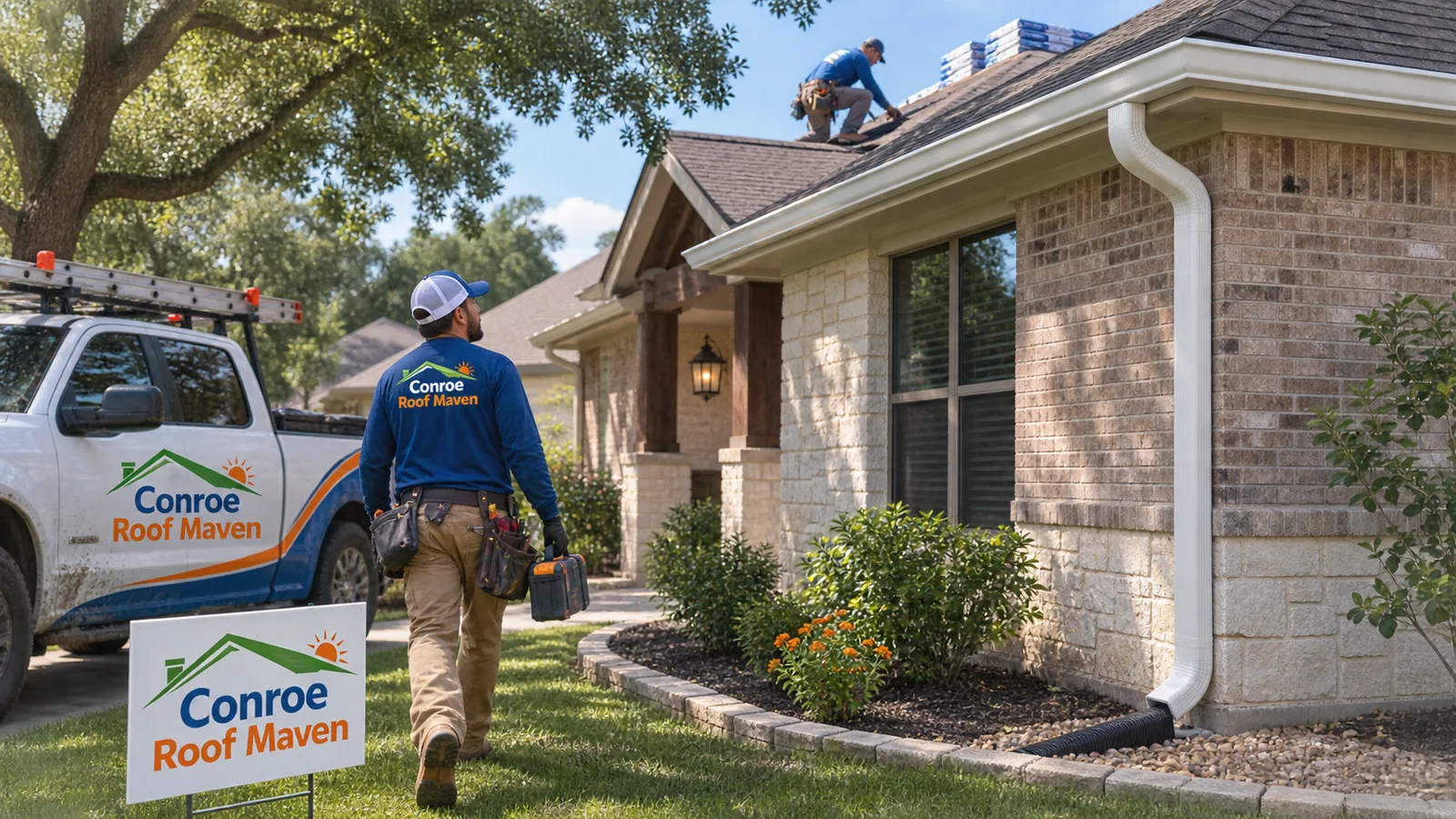
Protect your foundation, siding, landscaping, and entryways with a gutter system sized and installed for heavy Gulf Coast rainfall.
Roofline-based gutter planning helps move Conroe’s heavy rainfall away from siding, landscaping, entryways, and the foundation.
Properly installed gutters in Conroe, TX collect roof runoff and carry it to controlled discharge points before water can soak the soil beside the foundation. That matters in Southeast Texas, where thunderstorms can release a large amount of water in a short period. An undersized, clogged, or poorly pitched system may overflow at valleys and inside corners, leaving water against siding, doors, planting beds, and concrete.
Conroe Roof Maven installs, replaces, and repairs residential gutter systems. The work starts with the roofline rather than a one-size-fits-all package. Roof area, pitch, valleys, fascia condition, discharge locations, and the path water takes across the property all affect the design. The finished scope may include seamless gutter runs, outlets, downspouts, elbows, end caps, miters, and extensions that move runoff away from the structure.
Gutters also need to work with the roof edge. Drip edge should guide runoff into the trough, hangers need sound fascia behind them, and the gutter must sit at a useful height without interfering with shingles. If an inspection finds deterioration beyond the drainage system, our roofers in Conroe can assess that adjacent work before installation proceeds.
Seamless aluminum is a common residential choice because long sections can be formed to the measured roofline, reducing the number of joints along straight runs. Aluminum resists rust and is available in several colors. Galvanized steel is stronger but heavier, while copper offers a distinctive finish at a higher material and fabrication cost.
Five-inch K-style gutters fit many houses, but they are not automatically right for every roof. Six-inch systems provide greater capacity and are often considered for large roof planes, steep pitches, concentrated valley flow, or persistent overflow. Downspout quantity and outlet placement matter as much as trough size. A wide gutter with too few outlets can still back up during intense rain.
Installation details determine whether the system performs. The crew establishes positive pitch toward each outlet, fastens hidden hangers into sound material, seals end caps and miters, and positions downspouts where water can leave safely. Extensions or splash blocks should carry discharge away from the foundation without sending it toward a neighboring property, doorway, walkway, or low spot. Conroe properties differ, so drainage should be planned on site rather than copied from another house.
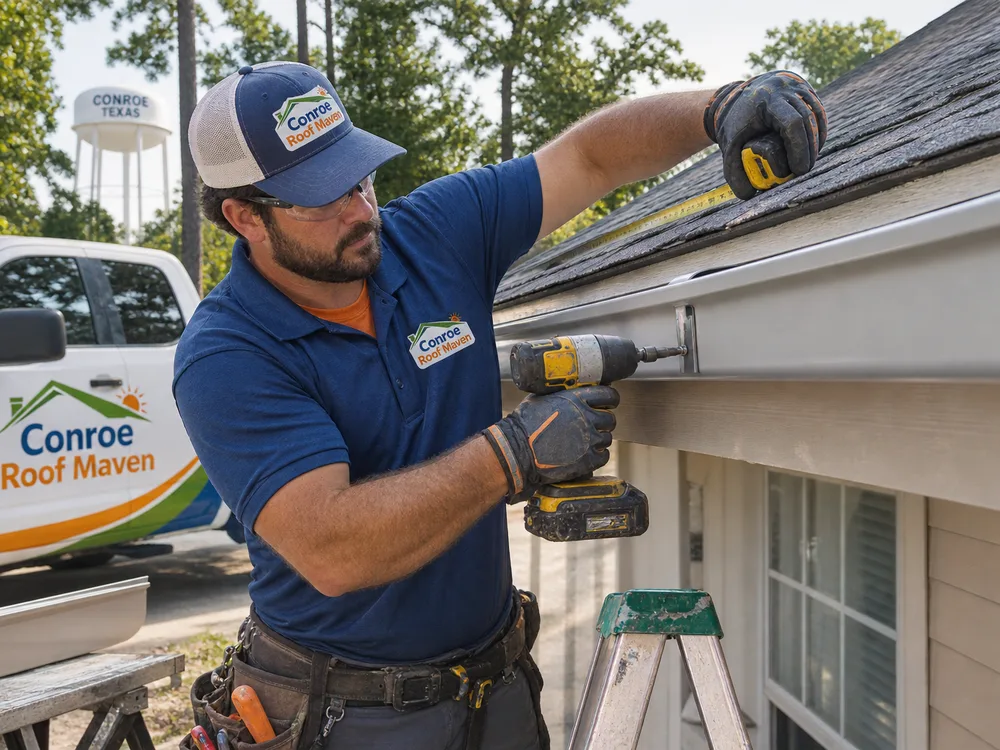
A new system is measured for the building and planned around roof area, pitch, valleys, fascia, and suitable discharge points. Seamless runs limit joints along straight eaves.
Replacement addresses gutters that are extensively corroded, bent, pulling away, repeatedly leaking, or too small for concentrated runoff. Existing sections are removed so the attachment surface can be checked.
Localized work may correct leaking miters, loose hangers, failed end caps, poor pitch, disconnected downspouts, or damaged sections when the remaining system is serviceable.
Outlets and downspouts are placed to drain each run efficiently. Elbows, extensions, and splash blocks help route water beyond the foundation and busy walking areas.
Guard systems can reduce the amount of leaves and larger debris entering the trough. They do not make gutters maintenance-free, and the right profile depends on the roof and nearby trees.
Secure hangers require solid attachment material. Soft, split, or deteriorated fascia should be identified before new gutters are fastened.
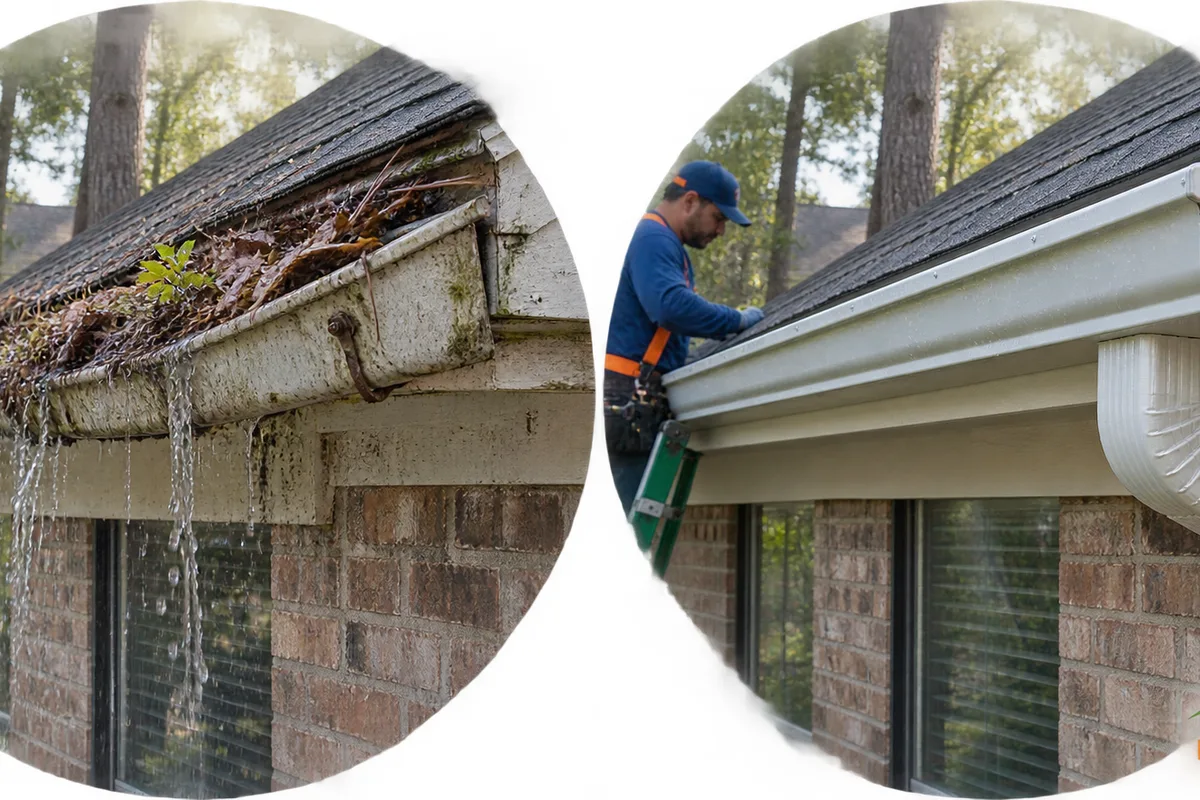
Overflow is the clearest warning, but its cause is not always a clogged trough. Water spilling over one short area may point to a blocked outlet, poor pitch, or heavy valley flow. Overflow along an entire run may indicate widespread debris, inadequate capacity, or too few downspouts. Dark streaks at seams often mark recurring leaks.
Look for gutters that sag between hangers, pull away from the fascia, or hold standing water after the rain stops. Peeling paint, soft fascia, washed-out mulch, soil channels, splash marks on siding, and recurring puddles near the foundation also justify an inspection. A downspout that ends beside the slab can create trouble even when every gutter joint is watertight.
After wind or falling limbs, check for twisted sections and separated downspouts from ground level. Avoid climbing onto a wet roof or leaning a ladder against damaged guttering. A close inspection can determine whether cleaning, resealing, rehanging, adding an outlet, or replacing a run is the sensible repair.
Step 1 of 5
The assessment covers eave lengths, roof planes, valleys, existing drainage problems, fascia condition, and practical places for downspouts to discharge.
Step 2 of 5
The scope identifies gutter profile, material, color, approximate run lengths, downspout locations, removal needs, and any known fascia work. Options such as guards should be listed separately.
Step 3 of 5
Seamless sections are cut to measured lengths. Installers set the pitch, secure hangers, prepare outlets, and complete corners and end caps.
Step 4 of 5
Elbows and downspouts are attached to move runoff from each outlet. Extensions or splash blocks are positioned according to grade, access, and nearby hard surfaces.
Step 5 of 5
The completed runs are checked for drainage, secure attachment, sealed joints, and clear outlets. Removed material and installation debris are collected before the final review.
Gutter installation in Conroe typically costs about $7 to $14 per linear foot for common seamless aluminum work, while copper, difficult access, extensive fascia repairs, guards, and unusually complex rooflines can raise the total. A small straightforward installation may cost under $1,500, while a larger whole-home system can reach several thousand dollars.
Final price depends on measured length, gutter size, material, story height, corners, downspout count, removal, and attachment condition. The exact cost is confirmed after an on-site inspection and written scope.
Get the roof edge, water flow, and discharge points evaluated before the next hard rain exposes another weak spot.
Call for a Free EstimateThe right size depends on roof area, pitch, valley concentration, and available downspout capacity. Five-inch K-style gutters may suit a straightforward roof, while six-inch gutters are often considered for larger or steeper roof planes and areas where valleys release concentrated runoff. Intense Southeast Texas rain also makes outlet placement and downspout quantity important. A field measurement is more reliable than choosing by house size alone.
Many straightforward residential installations can be completed in one working day, while large, multistory, or complex rooflines may take longer. Fascia repairs, difficult access, numerous corners, weather, and custom materials affect the schedule. The expected duration should be established after measuring the eaves and checking the attachment surfaces.
Damaged fascia should be repaired or replaced before gutters are secured to that area. Hidden hangers need sound material to hold the gutter under the weight of water and debris. Fastening a new system over soft or split wood can lead to loose hangers, sagging runs, and renewed overflow. The roof edge should be inspected before the installation scope is finalized.
Gutter guards can reduce larger debris, but no guard eliminates inspection and cleaning. Fine pine needles, seed material, roof granules, and windblown debris may collect on top or enter through openings depending on the guard design. The best choice depends on nearby trees, roof pitch, gutter profile, and whether the system remains accessible for maintenance.
Downspouts should discharge far enough away that water continues moving away from the foundation instead of soaking back beside it. There is no single extension length for every Conroe property because grading, planting beds, walkways, lot drainage, and neighboring structures differ. The outlet should not create a tripping point or direct runoff toward an entry, driveway, or adjacent property.
A localized leak can often be repaired when the surrounding gutter is structurally sound and properly sized. Failed sealant at an end cap or miter, a loose hanger, or a short damaged section may be repairable. Replacement is usually the better choice when corrosion is widespread, the gutter is badly distorted, multiple seams fail, or the existing layout cannot handle the roof runoff.
Proper gutter installation should not require fastening through the shingle surface. The gutter is typically attached at the fascia, with its position coordinated with the drip edge so runoff enters the trough. Existing drip-edge problems, lifted shingles, or deteriorated roof-edge materials should be identified before work begins rather than concealed behind the new gutter.
Tell Conroe Roof Maven where you see overflow, leaks, or standing water. Our team will inspect the roofline and prepare a clear scope for installation, replacement, or repair.