Leak Investigation and Repair
Leak work should trace moisture to its entry point, then address failed shingles, flashing, pipe boots, fasteners, or related components. Interior stains alone rarely identify the exact exterior defect.
Serving Conroe, Texas & surrounding areas
Mon–Fri 8am–6pm · Sat 9am–2pm
Get a careful roof assessment, a written scope, and practical recommendations based on the condition of your roof.
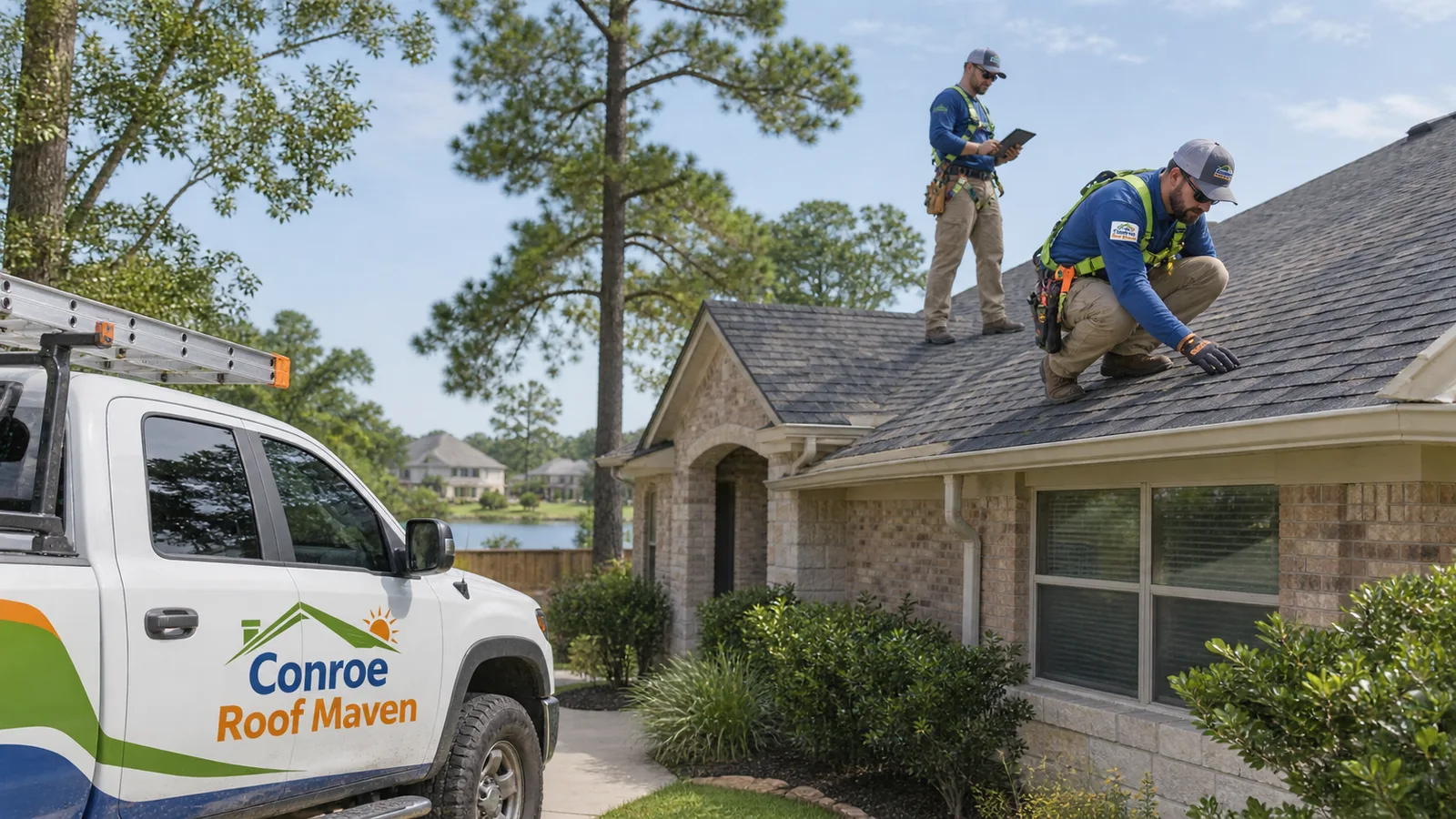
Choosing a roofing company in Conroe, TX, starts with finding a contractor who will inspect the entire roofing system rather than quote visible damage alone. Conroe Roof Maven evaluates shingles or other roof coverings, flashing, penetrations, drainage, ventilation, decking condition where accessible, and signs of interior moisture. The goal is to identify the cause of the problem and set out a sensible scope before work begins.
Roofing needs vary widely. A localized leak may call for replacing damaged shingles and correcting failed flashing. Widespread granule loss, brittle materials, recurring leaks, or deteriorated decking may support a broader replacement discussion. Routine maintenance can also catch exposed fasteners, damaged pipe boots, loose flashing, and sealant failure before water reaches insulation or finished surfaces.
Conroe's warm, humid climate and strong thunderstorms put roofs under repeated stress. Wind can lift poorly sealed shingles, wind-driven rain can expose weak flashing details, and heat can accelerate aging when attic ventilation is inadequate. A useful inspection connects those conditions to specific findings on your roof instead of relying on age alone.
A sound inspection begins at ground level with roof geometry, drainage paths, visible wear, and possible impact damage. On the roof, the contractor should examine field shingles, valleys, ridges, sidewalls, roof-to-wall intersections, pipe penetrations, vents, and chimney flashing when applicable. Gutters and downspouts should discharge water without forcing it back toward fascia or roof edges.
Inside the attic, accessible areas may reveal staining, damp decking, rusted fasteners, compressed insulation, blocked intake vents, or daylight at unintended openings. Moisture stains do not always sit directly beneath the exterior defect because water can travel along decking or rafters. That is why coating a suspected spot with sealant is often a temporary measure rather than a complete repair.
Ask the contractor to distinguish active damage from older staining and cosmetic wear. The written scope should identify the repair area, proposed materials, underlayment or flashing work, disposal, property protection, and how concealed deck damage will be handled if discovered after removal.
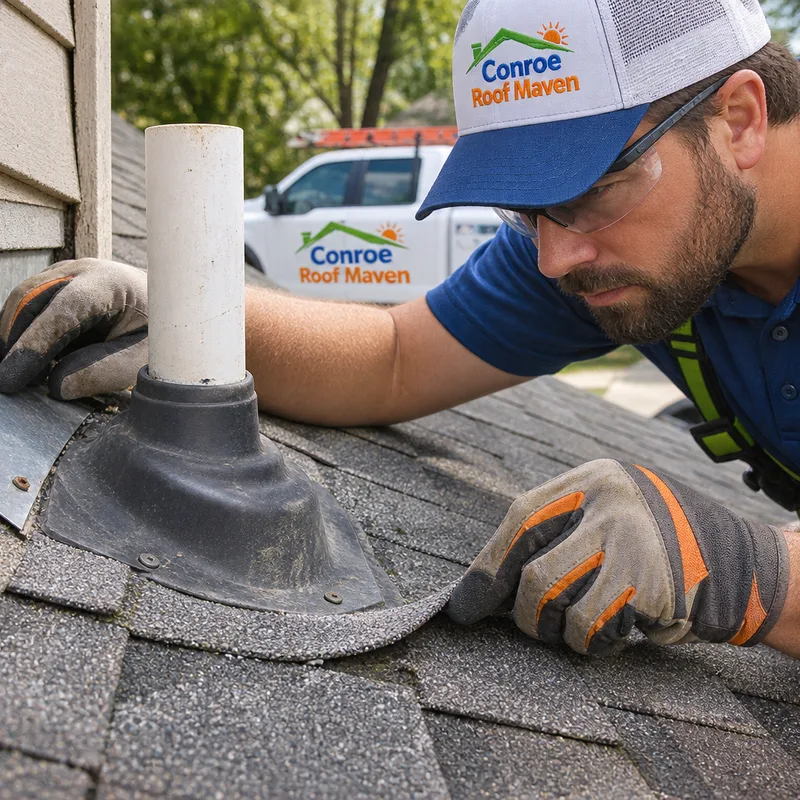
Leak work should trace moisture to its entry point, then address failed shingles, flashing, pipe boots, fasteners, or related components. Interior stains alone rarely identify the exact exterior defect.
After wind or hail, an inspection can document lifted, creased, fractured, or missing materials and check exposed edges and metal components. Emergency weatherproofing may be appropriate when the roof has an active opening.
Replacement planning covers removal, deck review, underlayment, flashing, ventilation, roof covering, cleanup, and final inspection. Material selection should account for roof slope, compatibility, appearance, and manufacturer installation requirements.
Periodic attention to debris, sealants, fasteners, penetrations, drainage, and minor material damage can reduce the chance that a small defect develops into an interior leak.
Balanced intake and exhaust ventilation helps manage attic heat and moisture. A contractor should confirm that vents are open, compatible, and sized as a system rather than adding exhaust vents without adequate intake.
Older homes near central Conroe may require extra attention to prior repairs and deck condition, while homes around Lake Conroe can have complex rooflines and heavy tree exposure. Newer subdivisions may still need storm inspections, flashing corrections, or warranty-related documentation.
Compare contractors by the clarity of their inspection and scope, not by the final number alone. A lower proposal may omit starter shingles, drip edge, valley treatment, flashing replacement, ventilation work, deck repairs, cleanup, or permit responsibilities. Ask each bidder to state the roofing system, product line, underlayment, flashing approach, workmanship coverage, manufacturer warranty, and change-order process.
Confirm that the contractor carries appropriate insurance and can explain who will supervise the work. Ask whether crews use fall protection, how landscaping and driveways will be protected, where materials will be staged, and how nails will be collected. Texas does not issue a statewide roofing contractor license, so insurance, references, written terms, and a clear local presence deserve close review. Permit requirements can depend on the property and scope; the City of Conroe Development Services department is the appropriate municipal source for work within city limits.
Be cautious with pressure to sign immediately, vague allowances, unusually large upfront demands, or an offer to manipulate an insurance deductible. A reputable Conroe roofing contractor can discuss storm documentation while leaving coverage and claim decisions to the insurer. For a broader introduction to the team handling local projects, Conroe roofers outlines the same inspection-first approach.
Step 1 of 5
Describe active leaks, recent storms, previous repairs, roof age if known, and any interior staining. Photos and dates can help narrow the investigation, but they do not replace an on-site assessment.
Step 2 of 5
The contractor examines accessible exterior and interior areas, documents defects, and considers roof slope, drainage, ventilation, material condition, and safety. Severe weather or wet surfaces may require rescheduling roof access.
Step 3 of 5
You receive recommendations tied to observed conditions. When both repair and replacement are reasonable, the differences in scope, expected limitations, and material compatibility should be explained plainly.
Step 4 of 5
The agreement should identify materials, work areas, protection measures, cleanup, payment terms, warranty information, and the process for concealed damage. Questions should be resolved before materials are ordered.
Step 5 of 5
The crew protects the property, performs the approved work, removes debris, and checks completed details. Final documentation should record approved changes and any maintenance recommendations.
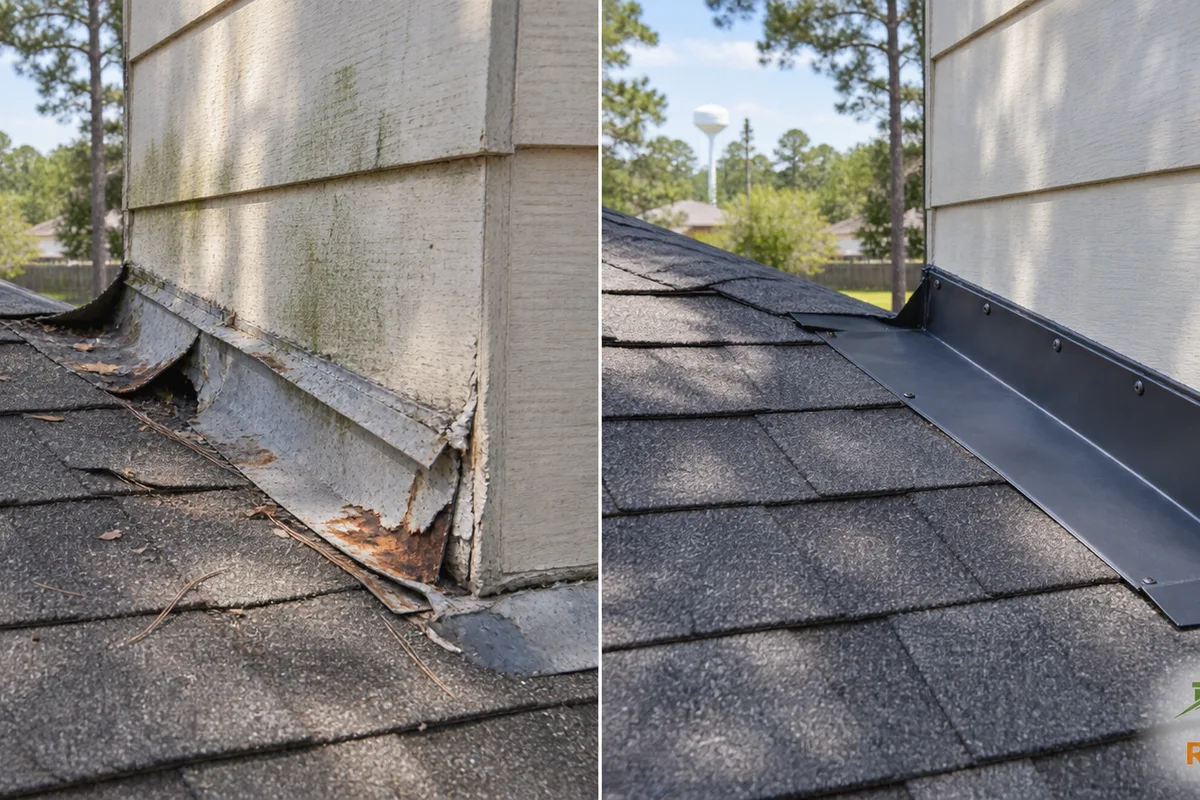
Repair is often reasonable when damage is limited, surrounding materials remain serviceable, and a compatible repair can restore the affected detail. Examples include an isolated flashing defect, a damaged pipe boot, or a small area of missing shingles. The repair still needs to address underlayment and decking if water has reached those layers.
Replacement becomes more practical when deterioration is widespread, leaks recur in separate areas, materials are too brittle to repair reliably, or large portions of the deck need access. Roof age is useful context, but condition matters more than a calendar estimate. Previous overlays, poor ventilation, repeated patching, and unavailable matching materials can also affect the recommendation.
Conroe homeowners should ask how each option handles the cause, not simply the visible symptom. A written repair limitation is useful when adjacent older materials may continue to fail. For replacement, ask how the contractor will handle valleys, wall intersections, ventilation, deck replacement rates, and manufacturer-required components.
Get the roof condition documented and compare practical options before approving repairs or replacement.
Call for a Free EstimateThe price depends on whether the roof needs a small repair, extensive leak correction, or full replacement, so an inspection is needed for a dependable figure. Repair pricing is affected by access, roof pitch, material matching, flashing work, and hidden deck damage. Replacement pricing also depends on roof area, tear-off layers, product choice, ventilation, disposal, and roof complexity. Ask for a written proposal that separates known work from unit prices or allowances for concealed damage.
Response time depends on weather, safe roof access, crew availability, and the number of properties affected after a storm. An active opening may first need a tarp or temporary weatherproofing, followed by a permanent repair when conditions allow. Move belongings away from dripping water and avoid entering an attic with wet electrical components or weakened decking.
The decision should be based on documented damage, roof condition, repairability, and material availability rather than the storm alone. A roofing contractor should check shingles, metal components, flashing, penetrations, soft metals, and accessible decking or attic areas. The insurance carrier determines coverage, while the contractor defines the construction scope and explains whether spot repairs can be completed without damaging surrounding materials.
Texas does not issue a statewide roofing contractor license. Property owners should verify current insurance, written warranty terms, references, contract details, and who is responsible for permits. For property inside Conroe city limits, municipal requirements should be confirmed with the City of Conroe before work begins.
Many straightforward residential replacements can be completed over a short run of suitable workdays, but the actual schedule depends on roof size, pitch, complexity, weather, material delivery, and deck repairs. Conroe thunderstorms and wet roof surfaces can interrupt work because tear-off and installation require safe conditions. The proposal should explain how exposed areas will be protected if weather changes.
A roofing estimate should identify the work area, tear-off, disposal, materials, underlayment, flashing, ventilation, deck-repair terms, cleanup, payment schedule, and warranty coverage. For replacement, it should also state the product line and how valleys, edges, ridges, penetrations, and wall intersections will be built. Written exclusions make it easier to compare roofing companies in Conroe on equal terms.
A contractor can inspect the roof, photograph observed damage, prepare a construction estimate, and discuss the work with an adjuster when authorized. The contractor should not promise claim approval or decide what the policy covers. Keep contracts, inspection photos, insurer correspondence, and approved change documents together throughout the process.
Asphalt shingles and standing-seam or exposed-fastener metal systems are common options, but suitability depends on roof slope, structure, budget, appearance, and installation details. Product ratings and warranties should be reviewed alongside underlayment, flashing, fasteners, and ventilation. A quality material will still perform poorly if incompatible components or weak details are used.
Tell Conroe Roof Maven what you have noticed, and arrange an assessment that turns roof conditions into a written scope and practical next steps.