Active Roof Leaks
We trace water entry around valleys, walls, chimneys, vents, skylights, and other transitions, then repair the failed material or detail when conditions allow.
Serving Conroe, Texas & surrounding areas
Mon–Fri 8am–6pm · Sat 9am–2pm
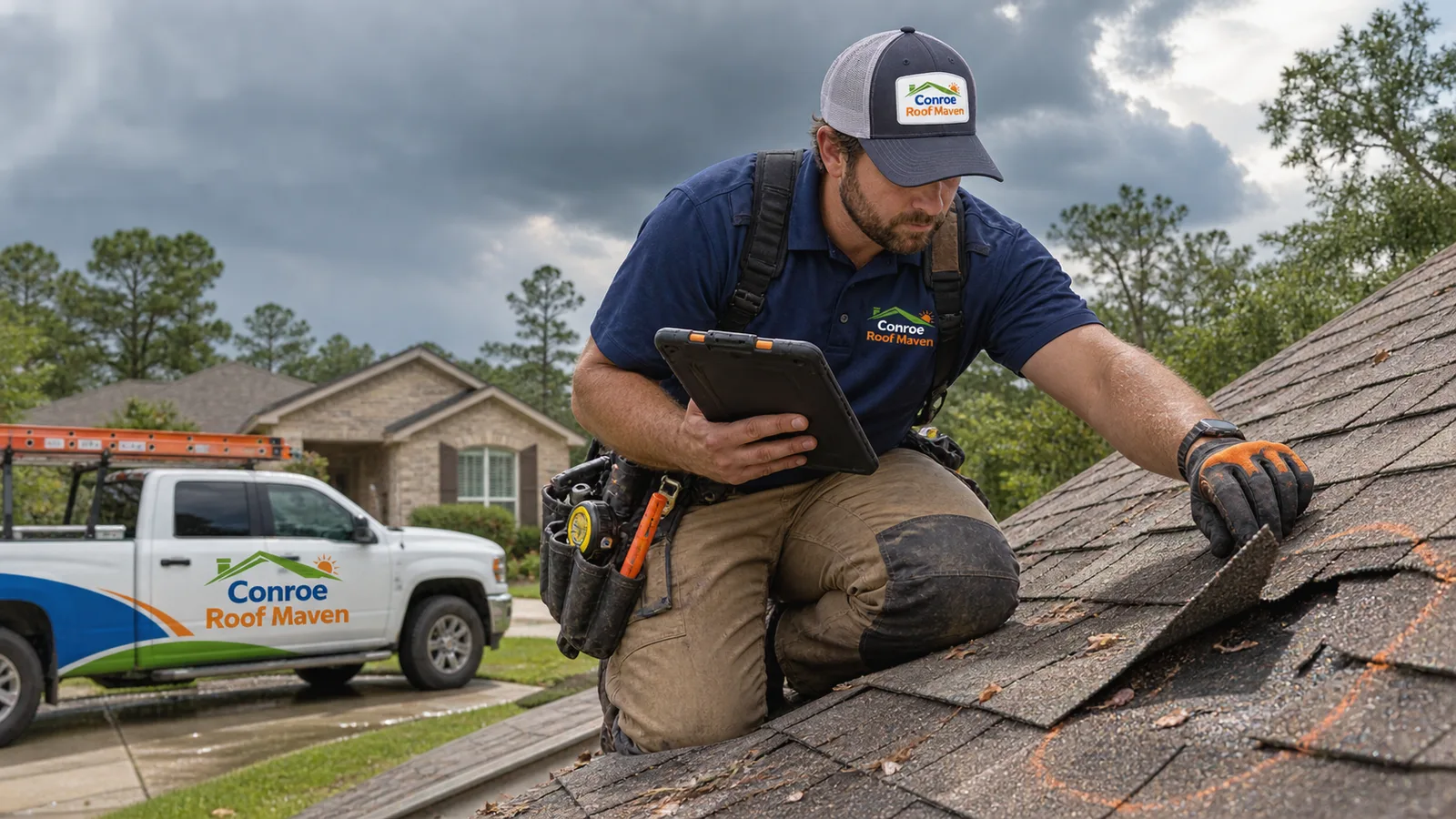
Prompt inspections, practical repair plans, and dependable work for residential and commercial roofs damaged by leaks, wind, hail, or normal wear.
When water is entering a building, a surface stain rarely reveals the full path of the leak. Roof repair Conroe work should begin with an inspection of the roof covering, penetrations, flashing, drainage points, and accessible attic space. Conroe Roof Maven traces the likely entry point before recommending a repair, so the scope addresses the defect rather than covering the visible symptom.
Common repair calls involve lifted or missing shingles, exposed fasteners, cracked pipe boots, failed sealant, loose flashing, punctured metal panels, and leaks around chimneys or vents. Low-slope commercial roofs may develop open seams, damaged membrane, or drainage-related ponding. The right repair depends on the roof system and the condition of the surrounding material.
Conroe's humid subtropical climate brings heavy rain, strong thunderstorms, high heat, and occasional hail. Heat can age sealants and asphalt components, while wind-driven rain can enter small openings that remain dry during lighter rainfall. Prompt inspection limits the time moisture has to affect decking, insulation, ceilings, or interior finishes.
A useful inspection separates the point where water appears indoors from the place where it enters the roof. Water can travel along decking, rafters, pipes, or insulation before reaching a ceiling. Our team checks the reported leak area indoors, then works outward across the roof to identify damaged materials and installation details that may be allowing water in.
For asphalt shingle roofs, that includes tabs, seal strips, nail placement, valleys, step flashing, counterflashing, pipe collars, and ridge or static vents. Metal roof checks focus on fasteners, seams, penetrations, closures, sealant joints, and signs of panel movement. On low-slope systems, inspectors look for punctures, split flashing, open laps, deteriorated penetrations, trapped moisture indicators, and restricted drainage.
We also check whether the nearby roof material can support a lasting repair. Brittle shingles, widespread granule loss, soft decking, or extensive membrane deterioration may make a small patch unreliable. If the damage is repairable, the written scope should identify the affected area, proposed materials, and any limits created by the roof's existing condition. Homeowners who need broader roofing guidance can work with experienced roofers in Conroe to compare the practical options.
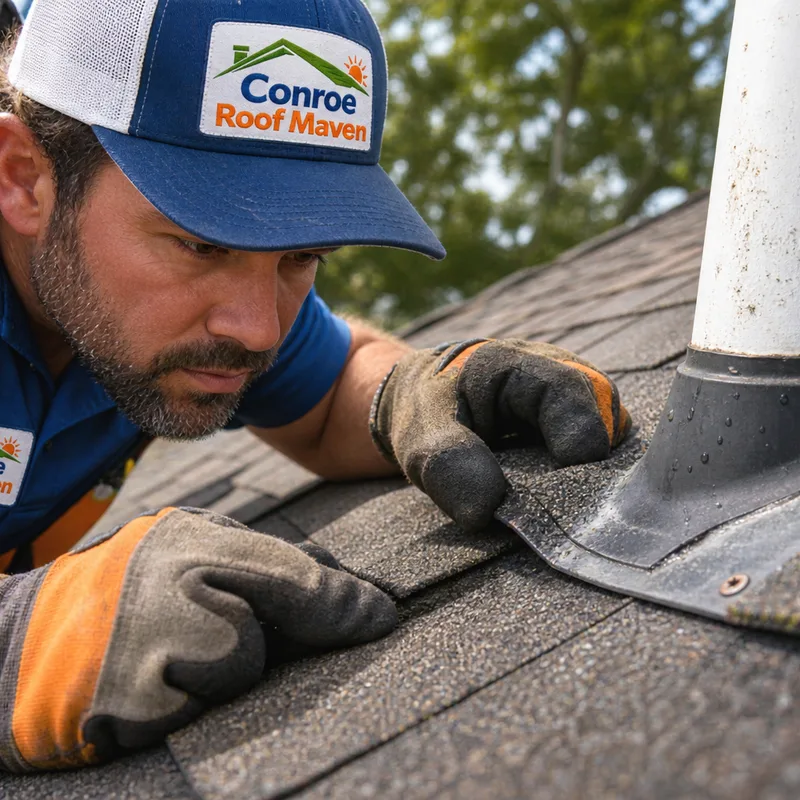
We trace water entry around valleys, walls, chimneys, vents, skylights, and other transitions, then repair the failed material or detail when conditions allow.
Inspection can identify lifted tabs, missing shingles, impact marks, loosened flashing, exposed underlayment, and damage around roof accessories after a storm.
Pipe boots, vents, wall intersections, and chimney details depend on correctly layered flashing. Cracks, corrosion, movement, or failed seals can create focused leaks.
Repair may include replacing damaged shingles, correcting exposed fasteners, securing loose components, and restoring compatible underlayment where accessible.
Loose fasteners, damaged panels, failed sealant, open seams, and penetration details are assessed according to the panel type and existing installation.
Membrane punctures, open laps, damaged flashing, and drainage concerns require materials and methods compatible with the existing roof system.
Step 1 of 5
Tell us where you see water, when it occurs, and whether the roof recently experienced wind, falling debris, or hail. Interior photos and the timing of the leak can help narrow the inspection area.
Step 2 of 5
We examine accessible interior evidence and roof components related to the problem. Safety, roof pitch, surface moisture, and weather conditions determine which areas can be inspected at that visit.
Step 3 of 5
You receive a clear description of the likely cause, the repair area, and any surrounding conditions that may affect durability. If more than one approach is reasonable, we explain the differences.
Step 4 of 5
The crew removes or opens only the material needed for the agreed scope, replaces damaged components, and restores flashing or weatherproofing details with roof-compatible products.
Step 5 of 5
We document the repair and explain what was corrected. If the roof has aging or unrelated defects outside the scope, those concerns are identified so you can plan rather than be caught off guard.
Roof repair in Conroe typically costs about $350 to $1,500 for a localized repair, while complex flashing, decking damage, steep access, or a larger storm-damaged area may cost $1,500 to $5,000 or more. These are general, nonbinding ranges.
Final price depends on the roof system, damage extent, material availability, pitch, height, access, wet insulation or decking, and whether temporary protection is needed. Matching discontinued shingles can also affect the plan. The exact cost is confirmed after the roof inspection and written scope.
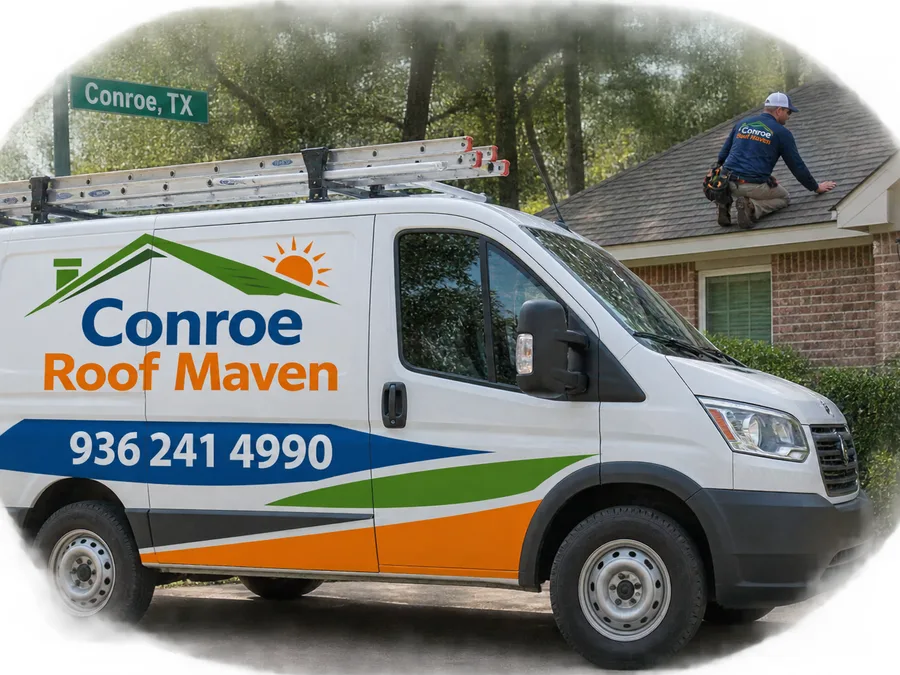
An active leak, exposed decking, a puncture, or missing material after a storm calls for prompt attention. Emergency roof repair in Conroe usually begins with making the area safer and limiting additional water entry. A temporary tarp or compatible emergency seal may be appropriate when wind, rain, darkness, or saturated materials prevent a permanent repair.
Keep people away from wet ceilings, sagging drywall, and standing water near electrical fixtures. Use containers only where the area is safe to enter, move belongings away from the leak, and avoid climbing onto a wet or storm-damaged roof. Photograph visible interior damage without putting yourself at risk. If there is a downed power line, fire, structural movement, or immediate danger, contact the appropriate emergency authority first.
Temporary protection is not a finished repair. Once conditions are safe and the roof is dry enough to assess, the damaged covering, flashing, underlayment, and decking should be evaluated. Conroe Roof Maven can then define the permanent scope and explain whether hidden water damage changes the work.
Roof construction varies across Conroe and the surrounding area. Established homes near central Conroe may have several generations of repairs or reroofing, so inspectors need to check how newer materials connect to older flashing and decking. In master-planned communities such as Grand Central Park, architectural rooflines can create valleys, wall intersections, and penetrations that deserve close attention during leak tracing. Around Lake Conroe communities such as April Sound and Walden, open exposure near the water can make wind-driven rain an important diagnostic clue.
Commercial buildings along the Interstate 45 corridor often use low-slope roof systems with rooftop equipment, curbs, drains, and many penetrations. Repairs in those settings require coordination around business access and close matching of the existing membrane or coating. Applying an incompatible product can interfere with adhesion and make later work more difficult.
A sound Conroe roof repair preserves serviceable roofing and replaces the failed components with compatible materials. It also accounts for the details around the damage. A shingle patch will not solve deteriorated step flashing, and sealant alone is not a substitute for correctly installed flashing. Clear documentation is useful if you are keeping maintenance records or discussing storm damage with an insurer, but coverage decisions remain with the insurance carrier and policy terms.
A small roof defect can become an interior repair after the next heavy rain. Arrange an inspection to identify the source and receive a written repair scope.
Call for a Free EstimateEmergency response depends on weather, crew safety, access, and current storm demand. During heavy thunderstorms, roof surfaces may be too wet or windy for safe permanent work, so the first practical step may be interior guidance or temporary weather protection. Once conditions allow, the roof can be inspected and a permanent repair scope prepared.
Yes, a localized leak can often be repaired when the surrounding roof material is sound and a compatible repair is possible. A failed pipe boot, isolated flashing defect, or small area of missing shingles may support targeted work. Widespread brittleness, soft decking, repeated leaks, or damage across several slopes can make a patch less dependable.
Many localized repairs can be completed within one working day after inspection and material confirmation. Complex chimney flashing, damaged decking, specialty metal panels, low-slope membrane work, or hard-to-match materials may require more time. Rain, high wind, and wet roof surfaces can delay safe work.
Permanent roof repairs generally require safe access and surfaces dry enough for materials to bond and be installed correctly. In active rain, emergency work may be limited to measures that can be performed safely, such as controlling interior water or installing temporary protection when conditions permit. The finished repair follows after the area can be opened and assessed.
Provide the building type, roof material if known, leak location, when the problem started, and whether it followed a specific storm. Mention ceiling sagging, electrical involvement, fallen limbs, or visible openings immediately. Photos taken safely from the ground or inside can help the team plan the inspection.
A close match may be possible, but an exact match depends on the manufacturer, product line, color, age, and current availability. Existing asphalt shingles also change appearance as they weather. The repair plan should identify known matching limits before work begins, especially on highly visible slopes.
You can schedule a roof inspection before deciding whether to file a claim. The inspection can document visible conditions and help define the repair need, while the carrier decides coverage under your policy. Avoid delaying emergency measures needed to limit additional damage, and keep photos, receipts, and written repair records.
Tell Conroe Roof Maven what you are seeing and when it started. We will arrange the next appropriate step, inspect the affected area, and explain the repair scope before work begins.