Active or Intermittent Leaks
Drips during wind-driven rain, ceiling stains, damp insulation, or water near a wall transition can indicate a failed seam, penetration, or flashing detail.
Serving Conroe, Texas & surrounding areas
Mon–Fri 8am–6pm · Sat 9am–2pm
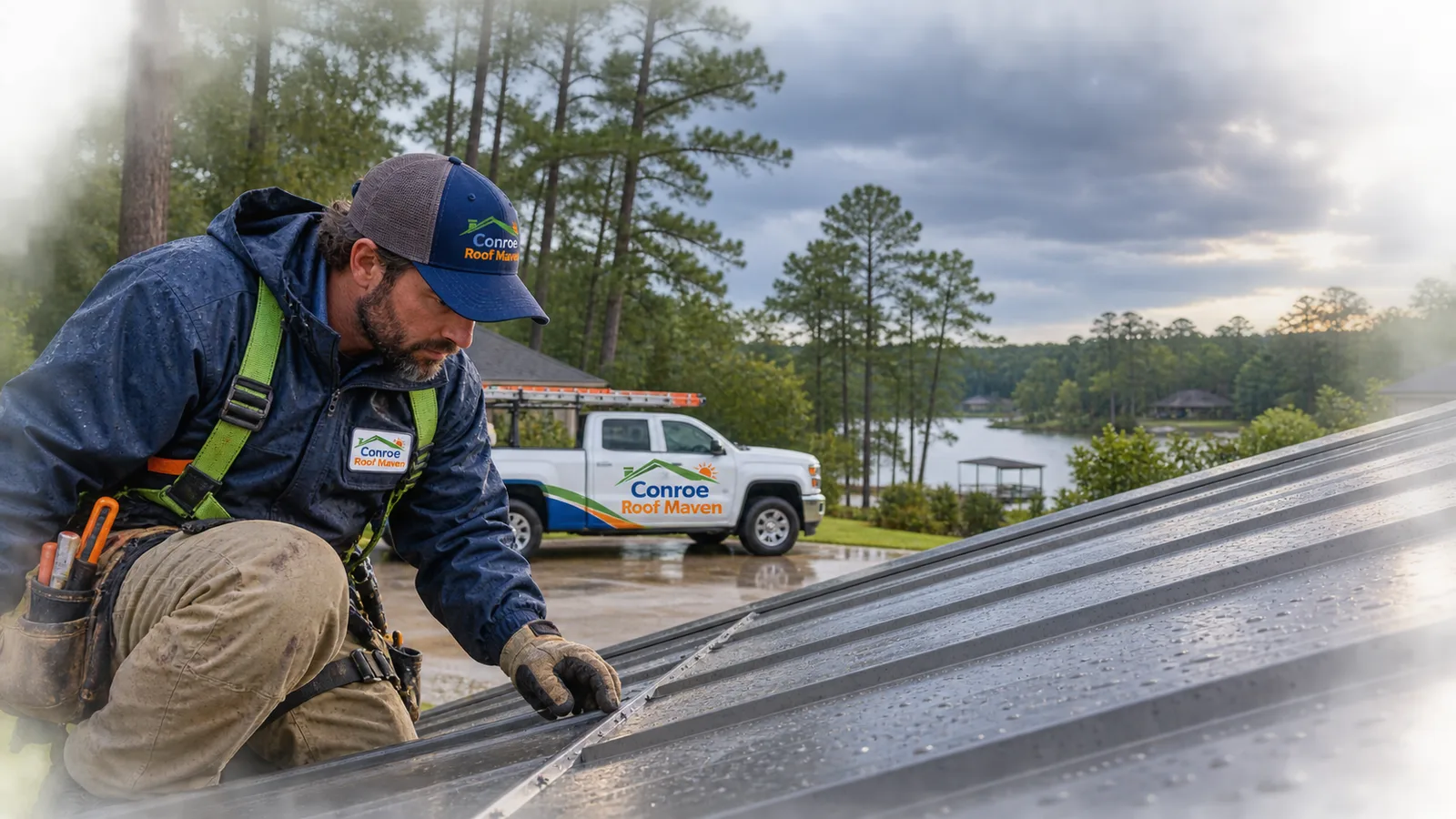
Stop leaks and protect sound roofing with a repair plan based on the panel system, damage, and condition of its fasteners, seams, and flashings.
Metal roof repair in Conroe, TX, should address the path water takes into the roof assembly, not merely the stain visible indoors. Leaks commonly develop around backed-out screws, deteriorated washers, separated laps, failed sealant, punctures, ridge details, and flashing at vents or walls. Water can then travel along a panel or framing member before appearing far from the opening.
Conroe Roof Maven begins with the roof system and leak evidence. The inspection considers whether the roof uses exposed-fastener panels or concealed clips, how panels terminate at eaves and ridges, and whether movement has stressed penetrations or seams. The resulting scope identifies the damaged components, suitable repair method, and any areas that warrant monitoring.
Conroe's hot sun, humid conditions, heavy rain, and severe thunderstorms can be hard on roof details. Heat causes long metal panels to expand and contract. Wind-driven rain can expose weak laps and flashings, while hail may dent panels or damage protective coatings. Prompt attention helps keep a localized defect from wetting insulation, decking, ceilings, or stored property.
A repair can be limited to one penetration or involve several related defects. Exposed-fastener roofs may need loose or incorrect screws replaced with compatible fasteners and sealing washers. Simply adding oversized screws everywhere is not always appropriate; stripped holes, panel movement, and the condition of the substrate must be considered.
Standing-seam systems require different methods. Repairs may involve clips, seam engagement, panel transitions, closures, or flashing designed to accommodate thermal movement. Roof penetrations need compatible boots, curbs, or flashing rather than a thick layer of general-purpose caulk.
We also assess rust, coating loss, punctures, open end laps, displaced ridge caps, damaged closures, and flashing failures at chimneys or walls. Where panels remain serviceable, a targeted repair may preserve the existing metal roof. If corrosion has perforated the metal or defects are widespread, the findings should be documented before deciding whether repair is still practical.
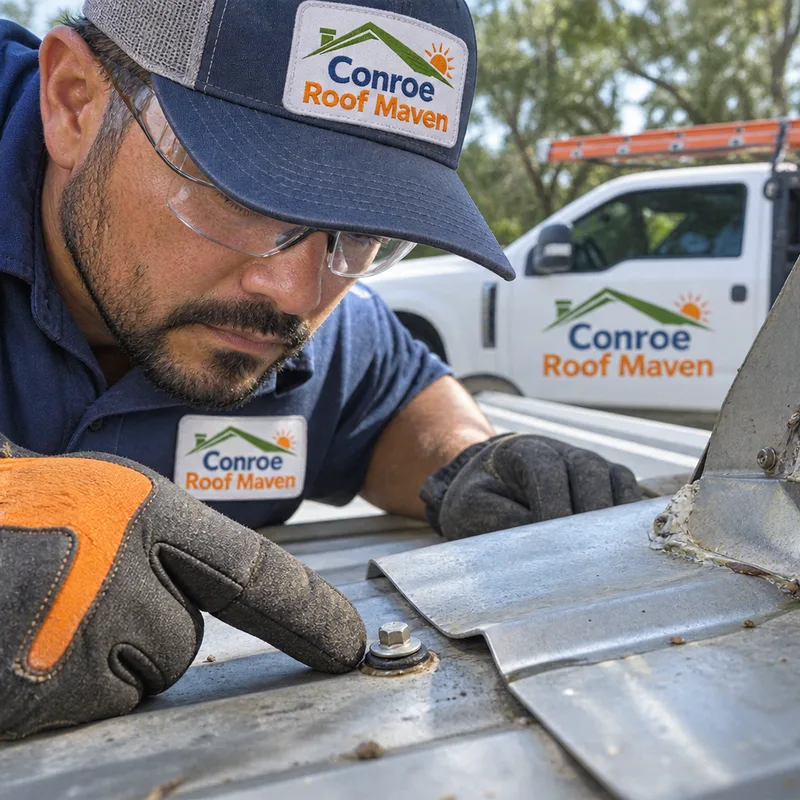
Drips during wind-driven rain, ceiling stains, damp insulation, or water near a wall transition can indicate a failed seam, penetration, or flashing detail.
Raised screw heads, cracked washers, missing fasteners, and enlarged holes can reduce clamping pressure on exposed-fastener panels.
Lifted laps, displaced ridge pieces, failed closures, and gaps around vents can admit rain even when the field of the roof looks sound.
Scratches, cut edges, standing debris, and worn coatings can expose metal. Surface oxidation and perforation require different repair plans.
Hail can dent panels and damage finishes. Wind can loosen trim or panels. Any suspected storm damage should be inspected safely and documented before temporary work hides it.
Popping may result from normal thermal movement, but buckled panels, stressed penetrations, or distorted seams merit closer review.
Step 1 of 5
The inspection starts with leak locations, weather conditions when water appeared, attic or ceiling evidence, panel type, roof slope, penetrations, fasteners, seams, and drainage paths. Safe access and roof condition determine how closely each area can be examined.
Step 2 of 5
The visible stain is compared with roof details uphill and nearby. When appropriate, controlled water testing may help isolate a difficult leak. Testing must be planned carefully so water is not introduced into unrelated areas.
Step 3 of 5
The proposed work states which components will be repaired or replaced and which materials will be used. It should distinguish a temporary measure from a lasting repair and identify concealed damage that may become visible after disassembly.
Step 4 of 5
Work may include replacing fasteners, installing boots or flashing, reseating seams, patching punctures with compatible metal, replacing closures, treating localized corrosion, or changing damaged panels. Materials must suit the existing metal and coating to avoid adhesion or galvanic-corrosion problems.
Step 5 of 5
Completed details are checked for secure attachment, proper laps, clean drainage paths, and controlled sealant placement. Photos can document repaired areas that are difficult to view from the ground.
Metal roof repairs in Conroe typically cost about $500 to $2,500, while difficult access, extensive flashing work, or multiple damaged panels can raise the price beyond that range. A minor fastener or penetration repair is usually at the lower end; custom-fabricated flashing and panel replacement cost more.
Final pricing depends on roof height and slope, panel profile, concealed damage, material compatibility, leak tracing, and whether matching metal or trim must be ordered. The exact cost is confirmed after an on-site roof inspection and written scope.
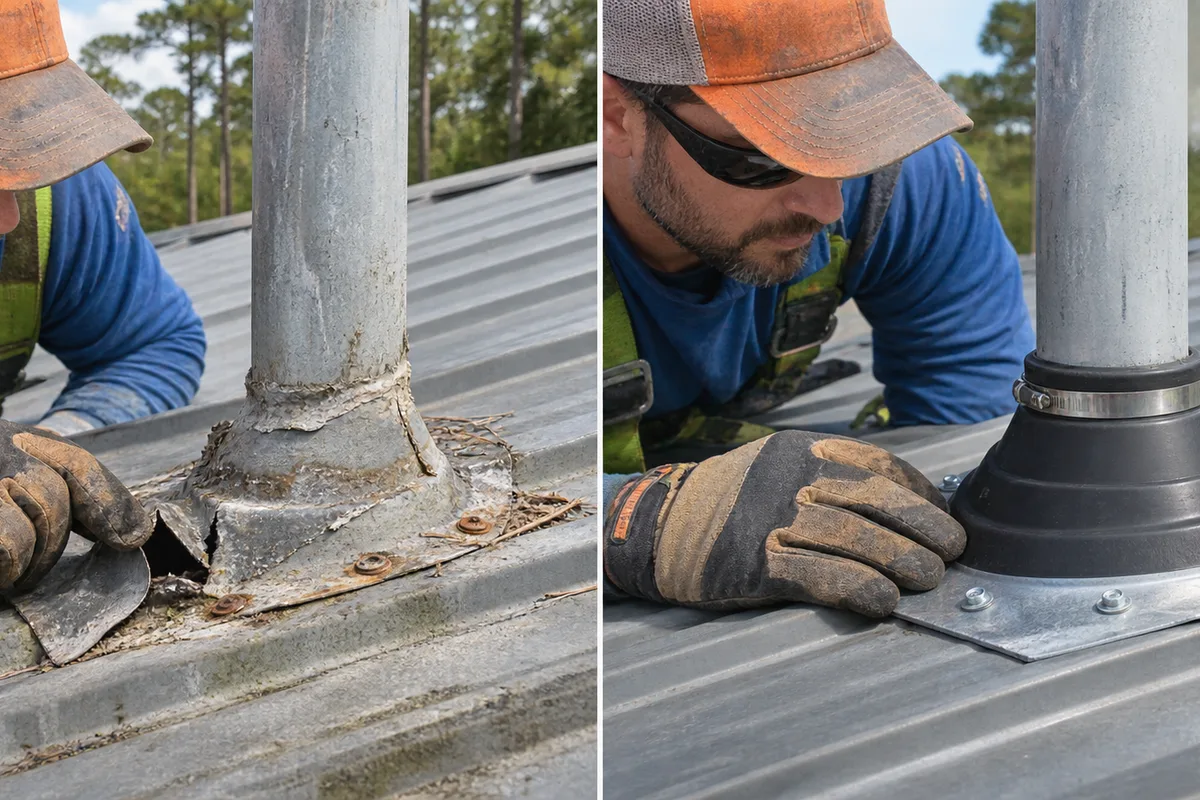
A repair is usually sensible when the roof is structurally sound and damage is concentrated around a limited number of fasteners, seams, penetrations, or panels. Broad corrosion, repeated leaks in unrelated areas, saturated insulation, or failing attachment can change that assessment. Age alone does not decide the issue. The roof's current condition and the feasibility of a compatible repair matter more.
Material identification is part of that decision. Galvanized steel, Galvalume-coated steel, aluminum, and painted panels do not all accept the same patching materials or cleaners. Copper and some other metals can react when placed against incompatible materials in the presence of moisture. Repair products also need to tolerate panel movement and remain suitable for the roof's coating.
Local conditions affect scheduling. Roof surfaces can become dangerously hot during warm Texas weather, and wet metal is slippery. Work may need to pause for rain, lightning, high wind, or unsafe surface temperatures. Homeowners comparing a broader roof project can discuss it with experienced roofers in Conroe, but this service remains focused on diagnosing and repairing metal roof defects.
A small opening can cause damage far from its source. Arrange an inspection to identify the defect and receive a clear repair scope before the next heavy rain.
Call for a Free EstimateYes, a metal roof can often be repaired when the panels and supporting roof assembly remain serviceable and the defect is localized. Suitable repairs may address screws, washers, boots, seams, closures, flashing, punctures, or individual panels. Widespread perforation, recurring leaks across unrelated areas, or extensive wet insulation may make a limited repair poor value.
Many localized metal roof repairs can be completed in one working day after the source is confirmed and materials are available. Complex leak tracing, custom flashing, steep access, concealed damage, or replacement panels can extend the work. Conroe thunderstorms, wet surfaces, lightning, and high wind may also require rescheduling for worker safety.
A close functional match is often possible, but an exact visual match cannot always be guaranteed. Panel profiles may be discontinued, and existing coatings fade with sun exposure. The repair must first match the panel geometry, metal type, gauge where relevant, coating compatibility, and water-shedding details; color matching comes after those technical requirements.
No, coating every screw and seam with sealant is not a proper universal repair. Sealant can fail if the surface is dirty, rusty, wet, incompatible, or moving beyond the product's limits. Fasteners may need replacement, and seams or penetrations may require mechanical correction, new closures, boots, or fabricated flashing before approved sealant is used in specific joints.
Protect the interior, move belongings away from the leak, and use containers only where they can be placed safely. Do not climb onto wet metal or enter an attic near electrical wiring and wet insulation. Record where water appeared and the wind direction if known; those details can help trace a wind-driven rain leak after conditions are safe.
Hail damage can sometimes be repaired by replacing affected panels or trim, but the right action depends on more than visible dents. An inspection should check coating fractures, punctures, opened seams, damaged locks, loosened fasteners, and distorted flashing. Cosmetic denting and functional damage are different, so documentation should identify which roof components have lost their ability to shed water.
A leak repair will not stop condensation unless the moisture is entering through a roof defect. Condensation forms when humid air reaches a metal surface below its dew point, so ventilation, air sealing, insulation, vapor control, and building use may need evaluation. In Conroe's humid climate, separating condensation from rain entry prevents spending money on the wrong fix.
Tell Conroe Roof Maven where the leak or damage appeared. We will assess the roof details, discuss practical repair options, and prepare a written scope based on what the inspection finds.